
How Does Rough Boring Head Work?
Abstract
A Rough Boring Head is a critical tool in precision machining used to enlarge and pre-finish existing holes in metal components. It is widely applied in industries such as automotive manufacturing, aerospace engineering, mold making, and heavy machinery production. This article provides a comprehensive explanation of how a Rough Boring Head works, its structural components, operational principles, application scenarios, selection criteria, maintenance methods, and common troubleshooting practices. The goal is to help users improve machining efficiency, reduce tooling costs, and achieve stable dimensional accuracy in boring operations.
Outline
- Introduction to Rough Boring Head
- Working Principle Explained
- Core Components Structure
- Industrial Applications
- Advantages in Machining Operations
- Selection Guidelines
- Maintenance and Care
- Common Issues and Solutions
- Technical Comparison Table
- Frequently Asked Questions
- Conclusion and Industrial Recommendation
Table of Contents
- Abstract
- Outline
- Introduction
- What is a Rough Boring Head?
- How It Works
- Key Components
- Applications
- Advantages
- Selection Guide
- Maintenance
- Common Problems & Solutions
- Technical Comparison Table
- FAQ
- Conclusion
Introduction
In modern machining systems, hole enlargement and finishing accuracy are essential for ensuring part assembly precision and mechanical performance. A Rough Boring Head is designed to handle the initial stage of enlarging pre-drilled holes with high efficiency and stability. Unlike finishing boring tools, it prioritizes material removal rate and rigidity over ultra-fine surface finish. This makes it indispensable in rough machining operations where speed and structural accuracy are key priorities.
What is a Rough Boring Head?
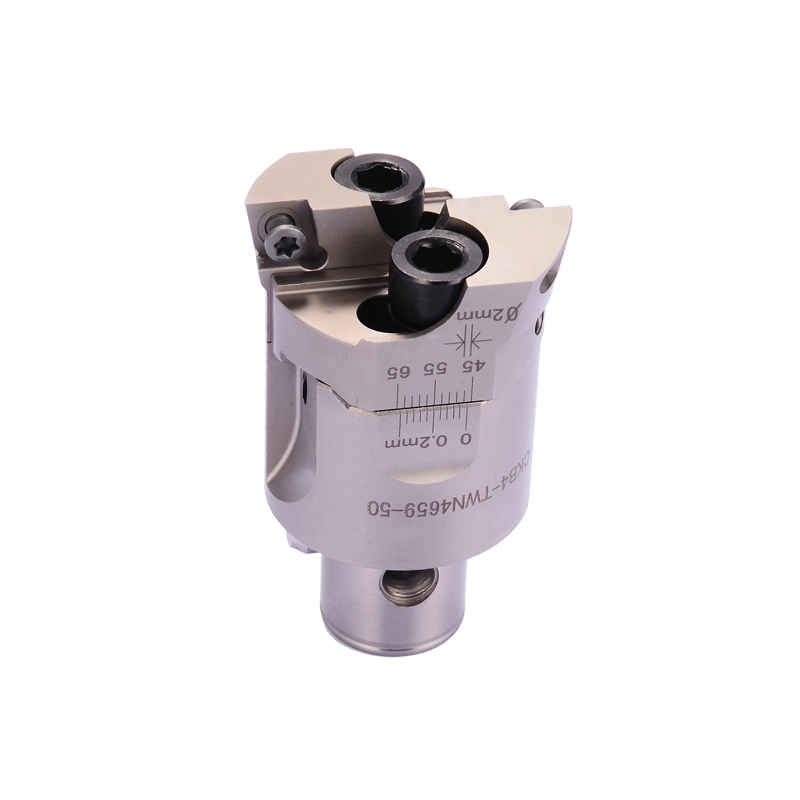
A Rough Boring Head is a precision-adjustable cutting tool mounted on milling machines, CNC machining centers, or boring machines. It holds one or more cutting inserts that can be adjusted radially to achieve different diameters. The primary function is to enlarge existing holes with controlled tolerances while maintaining tool stability under heavy cutting loads.
It is commonly used as a first-stage boring tool before finishing operations, ensuring that the workpiece is prepared for tighter tolerance machining.
How It Works
The working mechanism of a Rough Boring Head is based on radial adjustment and controlled cutting engagement. The operator or CNC system sets the desired diameter by adjusting the cutting insert position. Once the tool rotates, the cutting edge removes excess material from the internal surface of the hole.
- The tool is mounted on a machine spindle.
- The boring head expands to the required diameter.
- Rotational motion combined with axial feed produces cutting action.
- Chip removal occurs continuously during machining.
- The process repeats until the target diameter is achieved.
The rigidity of the structure ensures minimal vibration, even under high material removal rates.
Key Components
- Tool Body: Provides structural support and stability.
- Adjustable Cartridge: Allows precise diameter setting.
- Cutting Insert: Performs the actual material removal.
- Micrometer Scale: Ensures accurate adjustment readings.
- Clamping System: Secures the insert during operation.
Each component contributes to machining accuracy, vibration resistance, and operational safety.
Applications
Rough Boring Heads are widely used in industries requiring high-volume precision machining:
- Automotive engine cylinder boring
- Aerospace structural components
- Hydraulic cylinder manufacturing
- Mold and die processing
- Heavy machinery assembly parts
Their adaptability makes them suitable for both ferrous and non-ferrous materials.
Advantages
- High material removal efficiency
- Stable cutting performance under heavy load
- Adjustable diameter flexibility
- Reduced machining time
- Improved tool life compared to single-point boring tools
Selection Guide
Choosing the correct Rough Boring Head depends on several technical factors:
- Hole Diameter Range: Ensure compatibility with required machining size.
- Machine Type: CNC or conventional boring machines.
- Material Type: Steel, aluminum, cast iron, or alloys.
- Rigidity Requirements: Heavy-duty vs light-duty applications.
- Insert Compatibility: Carbide or coated inserts preferred for durability.
Maintenance
Proper maintenance ensures long-term tool performance and precision stability:
- Clean tool after each machining cycle
- Inspect cutting inserts for wear or chipping
- Lubricate adjustment mechanisms regularly
- Check calibration of micrometer scale
- Store in a dry and protective environment
Common Problems & Solutions
1. Vibration during cutting: Increase tool rigidity or reduce feed rate.
2. Poor surface finish: Replace worn inserts and optimize cutting parameters.
3. Diameter inconsistency: Recalibrate adjustment system and inspect spindle alignment.
4. Tool wear too fast: Use coated carbide inserts and reduce cutting speed.
Technical Comparison Table
| Feature | Rough Boring Head | Finishing Boring Tool |
|---|---|---|
| Purpose | Material removal (initial stage) | Precision finishing |
| Cutting Speed | High | Moderate |
| Accuracy | Medium | High |
| Surface Finish | Rough | Smooth |
| Material Removal Rate | Very High | Low |
FAQ
What is the main purpose of a Rough Boring Head?
It is used to enlarge pre-drilled holes quickly and prepare them for finishing operations.
Can it be used for finishing operations?
It is not recommended, as it prioritizes material removal rather than surface precision.
Which industries use it most?
Automotive, aerospace, heavy machinery, and mold manufacturing industries.
How often should inserts be replaced?
It depends on usage intensity, but regular inspection after each production cycle is advised.
Conclusion
The Rough Boring Head plays a fundamental role in modern machining workflows by enabling efficient and stable hole enlargement. Its adjustable structure, strong rigidity, and high material removal capability make it a preferred tool in industrial production environments. Proper selection, maintenance, and usage significantly improve machining productivity and part quality.
Zhejiang Younio Tools Co. Ltd. is committed to providing high-performance machining tools designed for industrial precision and durability. Our engineering solutions support efficient production across global manufacturing sectors.
For technical consultation, product details, or partnership opportunities, please contact us to receive professional support and tailored solutions for your machining needs.
Send Inquiry


X
We use cookies to offer you a better browsing experience, analyze site traffic and personalize content. By using this site, you agree to our use of cookies.
Privacy Policy